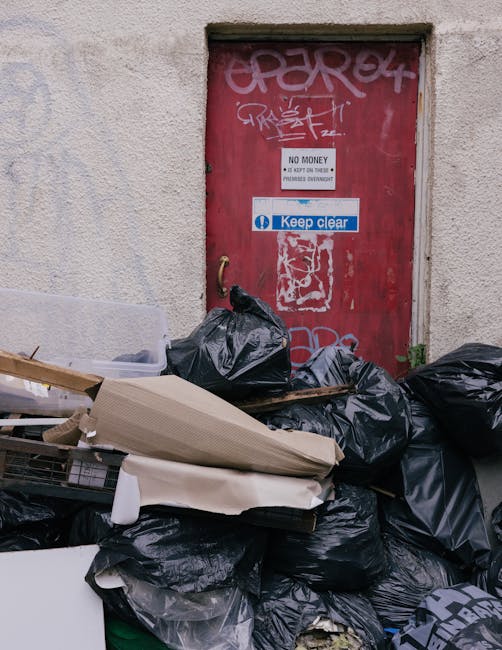
Brunel University student room rubbish clearance options

If you are staring at a student room full of flat-pack cardboard, old bedding, broken hangers, mystery mugs, and a bin bag that somehow grew legs overnight, you are not alone. Brunel University student room rubbish clearance options are usually needed at the exact moment you are busiest: moving out, moving in, or trying to reclaim a room before term starts again. The good news is there are several sensible ways to deal with it, and the right choice depends on how much waste you have, how quickly it needs to go, and what type of items you are clearing.
This guide walks through the practical choices, the pros and cons of each, and the small things that make clearance smoother. We will keep it grounded in real student-life situations, because let's face it, student waste is rarely neat or predictable.
Why Brunel University student room rubbish clearance options Matters
Student rooms fill up in a hurry. One week it is just a desk, a bed, and a few books. The next, you have packaging, food waste, damaged items, clothes you will never wear again, and maybe a sofa that was "free to a good home" until it stopped being so free to carry. Clearance matters because waste left too long becomes a nuisance, can attract pests, and creates avoidable stress during move-out week.
There is also a practical side that people overlook. If you leave clearing until the last day, you end up rushing, missing items, and paying more than you need to. A sensible clearance plan helps you separate what can be reused, what can be recycled, and what needs proper disposal. That is especially useful in shared accommodation where everybody is trying to leave at once and the hallway looks like a cardboard graveyard by 9pm.
For students near Brunel University, the right waste solution can also save a lot of time. Some people only have a few bags and a broken desk chair. Others are clearing an entire room after a year of accumulation. Different volumes call for different methods, and using the wrong one usually means extra lifting, wasted journeys, or items sitting in a corridor longer than they should.
Expert summary: the best rubbish clearance option is rarely the most obvious one. Match the method to the amount of waste, the access at the property, and how much manual handling you want to do yourself.
How Brunel University student room rubbish clearance options Works
In practice, student room clearance usually follows the same pattern: sort, bag, remove, and dispose responsibly. The difference lies in who does the lifting and how much space the waste takes up. A small clear-out can often be handled with a few bin bags and a car boot. A bigger end-of-term clearance might suit a rubbish removal visit, a man and van collection, or even a small domestic skip hire solution if there is a larger load.
One thing to remember: student waste is not just "rubbish". It often includes a mix of bulky items, recyclable materials, soft furnishings, electricals, and general waste. That mix affects the best route. For example, a mattress is handled differently from cardboard, and a broken mini-fridge is a different job again. If you are unsure what can go where, it helps to review what can go in a skip before you book anything.
Some clearances are time-sensitive. End-of-tenancy schedules can be tight, especially when you are moving out, returning home, and sorting your life out in the space of one rainy afternoon. In those cases, services such as same-day skip hire or wait and load skip hire can be useful because they reduce delay and keep access clear.
Key Benefits and Practical Advantages
The biggest benefit is simple: less hassle. But there is more to it than that.
- Faster move-out: You can empty a room without making ten trips to a distant bin store.
- Better organisation: Sorting waste early makes packing and cleaning much easier.
- Less damage risk: Clear walkways mean fewer knocks to walls, doors, and staircases.
- Responsible disposal: Reusable and recyclable materials can be handled properly.
- Less stress for housemates: One person's mess becomes everybody's problem in shared accommodation, sadly.
There is also a money-saving angle. It may seem cheaper to do everything yourself, and sometimes it is. But if you factor in car fuel, parking, time, and the back-and-forth of multiple trips, a straightforward clearance service can be better value. Not always, but often enough that it is worth checking.
Another advantage is tidiness. A student room that has been stripped out properly is easier to clean, easier to inspect, and easier to hand back. If you are dealing with leftover bulky items, specialist disposal pages such as mattress and sofa disposal and fridge and appliance removal can be more practical than trying to squeeze everything into a general collection.
Who This Is For and When It Makes Sense
This topic is not just for final-year students leaving halls. It matters to a few different groups:
- Students moving out of accommodation: especially at the end of term when time is tight.
- New students moving in: sometimes a room needs clearing before setup, or old items from the previous occupant remain in awkward places.
- Housemates sharing chores: shared waste builds up quickly, especially when one person takes charge of "the rubbish" and then disappears for a week.
- Landlords and letting agents: they may need a quick reset between tenancies.
- Parents helping with move-out day: often the practical reality is that someone else ends up driving, lifting, and asking where the recycling bin is.
It also makes sense when the waste is awkward. If you have a heavy bag of mixed waste, a broken desk, kitchen clutter, and old bedding all at once, you may prefer a service that removes everything in one go rather than trying to split the job into small pieces.
To be fair, some students only need a tidy-up and a few sacks. Others have what feels like an entire term of life compressed into one room. The right option depends on which of those situations sounds more like yours.
Step-by-Step Guidance
If you want the job to go smoothly, use a simple process. It does not have to be complicated.
- Empty the room first. Put everything on the bed, floor, or another clear surface so you can see what you actually have.
- Sort into categories. Keep reusable items, recycling, general waste, and bulky items separate.
- Identify anything restricted. Batteries, liquids, chemicals, and some electricals need special handling.
- Estimate the volume. A few bags may suit a simple collection; a larger load may justify skip hire or a van-based service.
- Check access. Ask yourself if there are stairs, narrow corridors, parking limits, or time restrictions.
- Choose the disposal method. Pick the option that matches the amount and type of waste.
- Book early if you can. Move-out periods get busy, and the last thing you want is a scramble on the final day.
- Clear and clean. Once waste is gone, sweep, wipe, and check drawers, sockets, and under furniture.
If you are dealing with a mixed load, a general skip hire option can work well, especially when you have a lot of cardboard, bagged waste, and broken furnishings. If you only need the waste collected from the door or the curbside, a collection-based service may be easier. Simple, really.
Expert Tips for Better Results
From experience, the clearest jobs are the ones that start before the room looks chaotic. Here are a few practical habits that make a real difference:
- Use sturdy bags. Thin bags split at the worst possible moment, usually on stairs.
- Break down cardboard. Flat-pack boxes take up far less room and are easier to move.
- Keep one bag for essentials. Chargers, keys, documents, and toiletries should not get mixed into the waste pile.
- Separate electrical items early. Mini appliances and old chargers get lost in general clutter very quickly.
- Book the service around your actual packing time. Not the ideal time. The actual one.
If the room is busy or access is awkward, an enclosed solution can help keep waste contained while you work. For example, enclosed and lockable skip hire is worth considering where you want a tidier setup. It is not always needed, but it can be helpful if the load is light, loose, or likely to scatter in a breeze.
One small but useful habit: take a quick photo of the cleared room before you leave. Not glamorous, but handy if you need to show that the space was emptied properly. You will be glad you did when you are half a borough away and suddenly unsure whether you left a lamp behind.
Common Mistakes to Avoid
Most clearance problems come down to rushing. That is the honest answer.
- Leaving everything until the last evening. This is the classic error, and it causes almost every other problem.
- Mixing restricted waste with general rubbish. Batteries, chemicals, paints, and similar items should never just be dumped in with everything else.
- Overfilling bags or boxes. Heavy loads split, tip, and become awkward to carry.
- Underestimating volume. What looks like "a few bits" often turns into a surprising amount once sorted.
- Ignoring access issues. A service that is fine on paper may not be practical if there is no parking or the lift is out of action.
Another mistake is choosing the wrong disposal route for bulky items. A mattress shoved into a general waste pile is not a solution. Likewise, white goods and appliances need a more suitable path, such as fridge and appliance removal. It saves time and avoids those awkward "we can't take that" moments on the day.
And, just to say it plainly, if you are not sure what can go in with what, ask before the waste leaves the room. It is always easier to check first than to untangle a mixed pile later.
Tools, Resources and Recommendations
You do not need a full toolkit to clear a student room, but a few basics help:
- Strong refuse sacks or rubble sacks
- Marker pens for labelling recycling, keep, and waste
- Box tape for flat-pack cardboard
- Gloves for rough items and dusty corners
- A vacuum or broom for the final sweep
- Storage bags for items being kept between terms
For service planning, it is worth checking practical pages like skip sizes and prices and pricing and quotes so you can match the method to the size of the load. If you want a better understanding of disposal rules, recycling and sustainability is a useful place to start because many student clearances contain more recyclable material than people realise.
If you want the job done with minimal waiting around, man and van and wait and load skip hire are two options worth comparing. The first is often useful for mixed loads and bulky items, while the second suits quick loading from a property with limited space.
Law, Compliance, Standards, or Best Practice
For student room rubbish clearance, the main thing is to dispose of waste responsibly and avoid putting unsafe or prohibited items into a general load. In the UK, waste duty of care principles apply in everyday practice: waste should be handled by a legitimate operator, kept separate where needed, and sent to appropriate facilities. You do not need to become an expert in waste law, but you should avoid handing suspiciously mixed waste to the first person with a van and a smile.
Best practice is straightforward:
- Keep recyclables separate where possible.
- Do not mix hazardous items into ordinary household waste.
- Use a service that can explain what it accepts and how it handles disposal.
- Make sure any collection or hire arrangement is clear about what is included.
- Check site rules for your accommodation before placing anything in shared areas.
When a room includes items that may be considered hazardous, it is sensible to handle them with extra care or choose a specialist route such as hazardous waste disposal. That is not overkill. It is just sensible.
If you are hiring a skip near roads, access points, or shared areas, permit requirements can sometimes be relevant. That is where skip hire permits or skip permits become part of the planning conversation. The exact need depends on location and placement, so it is worth checking before anything arrives.
Options, Methods, or Comparison Table
Here is a simple comparison of the main Brunel University student room rubbish clearance options.
| Option | Best for | Pros | Watch-outs |
|---|---|---|---|
| Self-clearance with bins or car trips | Small loads, a few bags, light recycling | Low direct cost, flexible timing | Time-consuming, parking and lifting can be frustrating |
| Man and van | Mixed waste, bulky items, quick pickup | Convenient, less lifting for you | Needs clear access and a booked slot |
| Rubbish removal | General room clearance and bagged waste | Simple, fast, often best for mixed loads | Less ideal if you have a very large volume |
| Domestic skip hire | Large clear-outs, staged loading, several bags | Good capacity, flexible for sorting over time | Needs space and possibly a permit |
| Wait and load skip hire | Fast loading where space is limited | No long on-site stay, quick turnaround | Requires you to be ready to load promptly |
| Same-day skip hire | Urgent clearances | Speed, convenience, reduced delay | Availability can be tighter in busy periods |
The key point is this: do not choose the biggest-looking option just because it sounds easier. Bigger is not always better. Sometimes it is just more than you need.
Case Study or Real-World Example
Picture a typical end-of-term room near Brunel University. The student is leaving on a Friday afternoon, with a train booked for later that evening. The room contains a broken chair, two bags of clothes, a mattress protector, cardboard from a desk setup, a small pile of kitchen bits, and one tired-looking mini-fridge that stopped working sometime around March.
In a case like this, the first step is sorting. The cardboard can be flattened, reusable items can be packed separately, and the appliance needs its own disposal route. A simple bin-run would be too slow. A full skip might be more than necessary if access is tight. A mixed clearance service, or a van-based collection combined with specialist appliance handling, is often the better fit.
That sort of arrangement saves the student from making multiple journeys and reduces the risk of leaving one awkward item behind. More importantly, it keeps the final handover calmer. No frantic last-minute drag of a broken chair down the stairs while someone else is waiting to clean the room. We have all seen that scene, or something very close to it.
And once the room is clear, the difference is immediate: bare floor, one echoey step, the smell of dust and detergent, and a weird little sense of relief. Not dramatic. Just nice.
Practical Checklist
Use this before you book or start loading waste out of the room:
- Have you sorted waste into reusable, recyclable, general, and bulky items?
- Do you know whether anything needs specialist handling?
- Have you checked access, parking, and timing?
- Do you know roughly how much waste there is?
- Have you chosen a method that fits the volume?
- Have you confirmed what the service will and will not take?
- Are all bagged items sealed safely and not overfilled?
- Have you flattened cardboard and removed obvious recyclables?
- Have you kept important personal items separate?
- Have you left enough time for a final sweep and room check?
If you can tick most of those off, you are probably in good shape.
Conclusion
Brunel University student room rubbish clearance options are really about choosing the most sensible route for the load in front of you. Small tidy-ups can be handled simply. Bigger move-outs may need a proper collection plan, skip hire, or a faster same-day solution. The best outcome is not the fanciest one; it is the one that gets the room clear, keeps stress down, and handles the waste responsibly.
Once you have sorted what stays, what goes, and what needs special care, the rest becomes much easier. A bit of planning goes a long way here, especially during the rush of term-end removals and shared-house chaos. To be fair, that one hour of organisation often saves half a day later.
Get a free quote today and see how much you can save.
And if you are still deciding, take a breath, make the first pile, and start with the easiest items. A clear room always begins with one small move.
Frequently Asked Questions
What is the best rubbish clearance option for a Brunel University student room?
It depends on how much waste you have. A few bags may suit a simple collection, while larger or mixed loads often work better with rubbish removal, man and van, or skip hire.
Can I put everything from my student room into a skip?
Not everything. General waste, cardboard, and many household items are usually fine, but hazardous materials and some electrical items may need special handling. It is always worth checking what can go in a skip before booking.
Is man and van better than skip hire for student clear-outs?
For smaller or mixed loads, yes, it often is. For bigger clearances, skip hire can be better because it offers more space and lets you load over time. The right answer depends on access and volume.
What should I do with a mattress or sofa from my room?
Use a specialist disposal route rather than treating it like regular waste. Mattresses and sofas are bulky and awkward, and they are usually best handled through dedicated mattress and sofa disposal services.
How do I get rid of a broken fridge or other appliance?
Use appliance-specific removal. Fridges and similar items are not ideal for general waste and should be collected through fridge and appliance removal so they are handled properly.
Do I need a permit for a skip near Brunel University?
Sometimes, yes. If a skip is placed on a public road or in certain shared areas, a permit may be needed. Skip hire permits or skip permits are worth checking before you book.
What if I only need the waste gone quickly on move-out day?
Same-day skip hire or wait and load skip hire may be useful if you need a fast turnaround. These options are especially helpful when you cannot leave a skip on site for long.
How can I make student room clearance cheaper?
Sort waste properly, flatten cardboard, keep recyclables separate, and avoid paying for space you do not need. Getting a clear pricing and quotes comparison also helps you avoid overordering.
Can student room rubbish be recycled?
Often, yes. A surprising amount can be recycled if it is separated correctly, especially cardboard, some plastics, and certain reusable household items. Recycling and sustainability should be part of the plan.
What should I avoid putting with general rubbish?
Avoid batteries, chemicals, paints, liquids, sharp objects that are not secured, and anything you are unsure about. If it feels questionable, stop and check rather than mixing it in.
Is there a good option for awkward access or tight hallways?
Yes. Wait and load skip hire or man and van can work well where access is tight or you need a fast loading window. Enclosed and lockable skip hire may also be useful where keeping waste contained matters.
Who should I contact if I want help planning the clearance?
If you want guidance on the best option for your load, use the company's booking and quote pages to discuss the details. You can also review the about and policy pages for a clearer sense of how the service is run and what to expect.